Two core algorithm updates, a potentially transformative interface shift and (seemingly) endless AI takes. 2026 has certainly felt like a big year for SEO so far. But scratch the surface and push past the confident declarations that we now live in a Search Everywhere Optimisation world and what’s actually changed?
Our mid-year review digs into the meat of the biggest SEO changes in the last six months and what they actually mean for how content is ranked and brands remain visible.
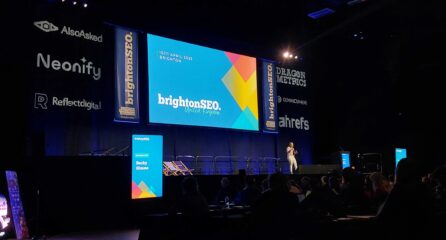
Against the backdrop of these changes, the Loom team took a trip to the pebbled shores of the south coast for the UK’s largest SEO conference, BrightonSEO. One of our favourite events on the marketing conference calendar, a trip to Brighton was a great opportunity for Jack, Hollie and Hannah to touch base with the wider industry and discuss fresh strategies for helping our clients reach their audiences.
Google announcements and core algorithm updates
In May, Google officially began rolling out its second major core algorithm update of the year, also following the more marginal March 2026 spam update and February 2026 discover update. This process finished in June and, according to Google’s research team, was designed to “better surface relevant, satisfying content for searchers from all types of sites.”
To summarise, this update sought to reinforce the importance of quality content and prioritises original insight, while reducing the visibility of thin, automated content. So, much the same, search specialists and brands should continue to write content for a human audience, not search engines – with an emphasis on promoting trust, experience and expertise. All the while, improving brand presence online for a smoother user experience.
What the short turnaround between the March and May announcements does highlight is Google’s increasingly rapid update cadence. We can expect to see continued SERP volatility persist throughout 2026 as Google evolves its AI-led search experience and recalibrates ranking systems.
Google announces what it actually wants you to do for AI search
Google has published its AI Optimisation Guide and the core recommendations centre on content that is helpful, reliable and written for people first, with an original point of view. Human readability is above technical signals, clean crawlability and indexation.
Google also uses the guide to address some persistent myths. Over-investing in structured data or LLMs.txt will not improve your AI search visibility. Generating pages at scale without adding genuine value risks violating spam policy. Building citations with the intention of simply appearing in AI results, much like old-school link building, falls outside their guidelines.
The broader message is consistent with what we tell clients: quality and trust compound over time. Brands that have invested in genuine topical authority and a healthy technical foundation are better positioned for AI search, not because they optimised for it specifically, but because they built something worth citing.
There’s now more control over how your content appears in AI search
On 3rd June, Google introduced a set of new controls and performance insights for navigating the growth of generative AI features in Search. You can now identify how users are discovering your site through LLMs like ChatGPT, Gemini and Claude in a new AI Assistant channel in your Default Channel Group reports.
However, the most significant is a new toggle in Search Console, which allows site owners to decide whether their content should appear in and help ground responses in Google’s generative AI features, including AI Overviews, AI Mode and AI Overviews in Discover. Sites that opt out will not receive traffic or impressions from those features.
Alongside this, Google is rolling out new performance insights in Search Console, giving website owners visibility into how their pages are appearing within generative AI search features, including impressions metrics.
For most businesses, opting out will not be the right call. Generative AI features now reach significant and growing audiences and removing yourself from that removes a meaningful source of brand visibility. The more useful question is whether your content is structured to be cited accurately and confidently by those systems.
Introducing, the intelligent search box
In tandem with the May core algorithm shift, Google introduced perhaps the most significant structural change to its desktop and mobile interface in decades – the intelligent search box.
Powered by Gemini 3.5 Flash, this update transforms the standard search bar into one that expands as you type to accommodate longer, hyper-specific queries and prompts. The interface seemingly aims to anticipate full conversational paths before the user finishes typing. Intelligent search boxes also feature buttons to help users upload files, images, documents and even chrome tabs for a multi-modal search experience.
What does this mean? We anticipate this is another step in the transition to AI Mode as the primary search option. The option to utilise documents and images is a reflection not just of Google’s new approach, but how user expectations around search are growing in the wake of widespread LLM adoption.
This is the next step of a trend Google began with AI Overviews and AI Mode, one that organic strategies must adapt to by targeting conversational, long-tail keywords and ensuring all content assets are optimised to be pulled as a verified resource. d Austria. UK brands must now implement localised strategies for each international market, as blanket certifications are no longer supported.
Search Everywhere Optimisation: What the “SEO rebrand” actually means
The phrase “Search Everywhere Optimisation” has been heard everywhere, framing SEO as something that now extends beyond Google to encompass TikTok, Reddit, AI assistants, YouTube and wherever else users are actively looking for answers.
It’s true that users are resolving queries across a wider range of platforms than they were five years ago. Discovery is more fragmented so relying on a single channel for organic visibility carries more risk than it once did.
However this doesn’t replace high-quality SEO. The principles that drive visibility in traditional search, topical authority, trustworthy content and accessibility remain the foundation for visibility in almost every channel.
For complex businesses managing multi-channel marketing, a connected content strategy, built on genuine authority and consistent brand signals, is what gets results. The term may be new, but the work that goes into it is not.
What the Loom team learned at BrightonSEO 2026
BrightonSEO has always been an important barometer for how the wider marketing industry is reacting to changes across SEO. A chance to sort the hype from genuine impact.
This year, speakers across the conference reinforced our core belief – in a world increasingly informed by automation, investing in human creativity, understanding user behaviour and trusting your robust SEO fundamentals remain the cornerstone of achieving digital visibility.
Here’s a snapshot of the talks Jack and Hannah found the most enlightening at BrightonSEO 2026.
“We build AI agents to win AI search”

Jack, Tech SEO
Unsurprisingly, AI was still the talking point on everyone’s lips at this year’s conference. With LLMs now an everyday reality of marketing workflows, the conference was awash with clever ways to streamline research, analysis and optimisation.
This session delivered by Samanyou Garg explored how agencies can move past basic prompts to build custom, structured networks of AI agents that handle time consuming aspects of everyday SEO work. It introduced the concept of utilising MCPs (Model Content Protocols) to create an internal structure of specialist bots that talk to one another and automate repetitive tasks. For example, an agent may be used to schedule and run routine performance checks, from which an SEO can analyse the data to identify patterns and devise new approaches.
We learned an AI agent is only as good as the human expert training it. While you can deploy specialised agents to schedule and run routine technical data checks or handle initial keyword clustering, the true value still requires a human eye.” – Jack, Organic
The talk also highlighted and reinforced how visibility is shifting in an AI-first world. Ranking first on a traditional SERP doesn’t carry the same weight if an LLM is answering that query directly. To succeed in AI search, brands need to establish the deep topical authority that secures LLM citations as a trusted search. Utilising these agents frees up creative’s time to produce non-commodity content that demonstrates experience.
LLM visibility and AI-driven search: What replaces ‘rankings’ as the primary KPI”

Hannah, Multi-channel Strategy The core lesson of Judith Lewis’ presentation concerned search’s ongoing transition from rigid keywords into fluid, conversational interactions, and how our measurement models have to change with it. A great insight into what KPIs might come to replace rankings in the age of AI.
At Loom, we’re continually evolving our reporting frameworks to move beyond one-dimensional tracking, building out new multi-channel models that measure brand citation inside AI search.
“The key talking point that sat with me is the reminder that people and human behaviour remain at the core of search, and so key principles remain – every data point is a human decision in disguise.” – Hannah, Multi-channel
Want to explore more of Loom’s insights from BrightonSEO? You can read our analysis from previous conferences here:
Stay on the cutting edge of search with Loom
It might feel like SEO is changing at an unsustainable pace; that AI has changed the rules of the game and old strategies carry no weight any more. But SEO has always been this way. While innovations and implementations have changed the playing field, the goal remains the same – securing visibility for long-term growth.
Seeking a trusted industry partner to help you navigate these changes? Reach out to our team today to explore our SEO and Multi-channel services.